Owning a boat is a big investment, and how you detail it can either protect that investment or slowly destroy it. Many boat owners make the same simple boat detailing mistakes that lead to faded gelcoat, stained hulls, and expensive repairs down the road.
The good news? Once you know what to avoid, it’s easy to adjust your routine and keep your boat looking clean, glossy, and ready for the water.
One of the most common boat detailing mistakes is grabbing whatever household cleaner is under the kitchen sink. Products made for bathroom tile or home windows can be too harsh for gelcoat, vinyl, and marine finishes.
Over time, these strong cleaners strip away wax, dry out upholstery, and can even dull or stain your surfaces. For a deeper look at good gelcoat care habits, check out this gelcoat maintenance guide from Practical Sailor.
Use marine-safe soaps on your hull and topside.
Choose cleaners designed for vinyl, canvas, and clear plastics instead of all-purpose household sprays.
Always read the label and test any new product on a small, hidden area first.
If you’d rather skip the guesswork, you can always let a professional crew bring the right products and techniques to your dock by booking a boat package directly through Sea Ranger’s Boat & Cabin services page.
After a long day on the water, it’s tempting to tie up, pack up, and head home. The problem is that salt doesn’t take a day off. When you leave salt sitting on your boat, it starts to attack metal, gelcoat, and hardware almost immediately.
This leads to corrosion, oxidation, stains, and that rough, chalky feel on your hull and topside. If you store your boat after saltwater use, a thorough freshwater rinse is one of the best ways to prevent corrosion and long-term damage.
Rinse the entire boat from top to bottom with fresh water, including railings, hardware, and under the rub rail.
Pay attention to areas that catch spray: bow, windshield, and non-skid decks.
Rinse the hull as far down as you can reach at the dock or ramp.
Even a quick rinse after every trip dramatically reduces long-term damage and keeps your regular details more effective.
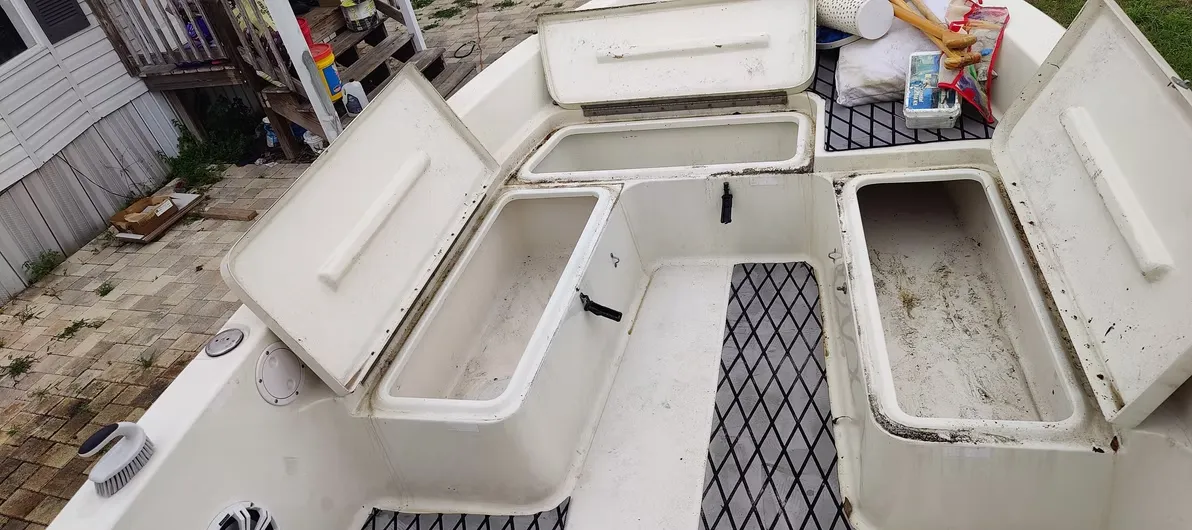
It’s easy to focus on what you see every day: shiny topsides, cushions, and glass. But non-skid decks, hatches, gutters, and the hull itself often get neglected.
Left dirty, non-skid can become stained and slippery, and the hull can build up scum lines, oxidation, and marine growth that are much harder to remove later.
Non-skid decks and steps
Hatches and gutters where dirt and salt collect
Under railings and around cleats
The hull, especially around the waterline
At Sea Ranger, our boat packages include cleaning non-skid, hatches, gutters, scuff mark removal, and hull cleaning, plus options like orange scum mark removal and metal polishing. That level of detail is what keeps a boat looking “like new” rather than just “washed.”
For boat owners who like to DIY between full details, this non-skid cleaning guide is a helpful reference on safe scrub techniques and products.
Another sneaky boat detailing mistake is using the wrong tools: stiff brushes, dirty rags, or old bath towels. These can create swirl marks, scratches, and hazing on your gelcoat and clear plastics.
Once those micro-scratches build up, your boat loses its shine and becomes harder to clean.
Use soft wash mitts or microfiber pads on painted and gelcoat surfaces.
Reserve stiffer brushes for heavily textured non-skid or very dirty areas only.
Always use clean, high-quality microfiber towels for drying and buffing.
Professional detailers rely on the right brushes, pads, and microfiber to safely wash, compound, and polish boats without adding damage. Sea Ranger’s oxidation removal and polishing services are specifically designed to restore and protect your paint and gelcoat using the right tools for each surface.
Microfiber towels are popular because they absorb more water than cotton and minimize scratching on gelcoat and glass.
Washing without protecting is like showering and then walking out into the sun without sunscreen. When you skip wax, sealant, or ceramic coating, your gelcoat and paint are exposed to sun, salt, and pollutants.
The result is oxidation, fading, chalky surfaces, and that “tired” look that makes a boat appear older than it really is.
In sunny, coastal environments, plan on waxing at least a few times a year. Many marine detailers suggest waxing every 3–6 months for boats that live in sun and salt, with more frequent waxing for heavily used vessels.
Consider professional compounding and polishing when you see heavy oxidation.
Upgrade to higher-end protection like marine sealant or ceramic coating for longer-lasting results and easier cleaning.
Sea Ranger offers wash-and-dry services, oxidation removal with compound and polish, hull cleaning, non-skid cleaning, vinyl protection, metal restoration, canvas cleaning, and more, priced by the foot so you can choose the level of protection your boat needs.
You don’t have to do everything yourself. There’s a time and place for quick DIY washes, and a time to call in a professional detailing team.
If you’re seeing heavy oxidation, orange scum marks on the hull, stubborn stains in non-skid, or metal starting to rust, those are strong signs it’s time for a full professional detail.
We wash and dry the entire boat, including the hull, windows, non-skid, carpet, and teak.
We remove scuff marks, clean hatches and gutters, restore metal, treat vinyl, and apply protection to keep your boat looking great.
You get transparent per-foot pricing for different packages and can book a detail package online at your convenience.
If you’re ready to avoid these boat detailing mistakes and let a professional crew handle the hard work, you can explore our current boat and cabin detailing options and request your free estimate through the Sea Ranger Mobile Detailing website.
For boats used regularly in sun and saltwater, a basic wash after each trip and a full detail (including protection) every 3–6 months is a good rule of thumb. Boats that sit in the water or are used heavily may benefit from professional detailing more often.
It’s best not to. Household cleaners and some car soaps can be too harsh for gelcoat, vinyl, and clear plastics, stripping wax and causing dullness over time. Marine-safe soaps and cleaners are formulated specifically for boat surfaces and are much safer in the long run.
Salt left on your boat continues to attract moisture and eats away at metal, gelcoat, and hardware even when the boat is sitting still. A thorough freshwater rinse helps prevent corrosion, stains, and oxidation, and it also makes your next wash or detail much easier.
Use soft wash mitts or microfiber pads on gelcoat and painted surfaces, and high-quality microfiber towels for drying and buffing. Reserve stiff brushes only for tough non-skid areas or very dirty spots, since aggressive bristles can create swirl marks and scratches.
If you notice heavy oxidation, chalky or faded gelcoat, stubborn scum lines on the hull, or pitted and rusty metal, it’s time to call a professional. A pro detailer has the tools, compounds, and techniques to safely correct damage, restore shine, and apply long-lasting protection that most DIY setups can’t match.