If your boat lives in the water full‑time, underwater boat shaft zinc anode replacement is one of the most important maintenance tasks standing between you and a very expensive repair. Most boat owners never think about their zinc anodes until something goes wrong, such as a rough shaft, a pitted prop, or a gear housing that looks like it has been sandblasted from the inside. By the time you can see that kind of damage, the corrosion has already been working for months.
Sea Ranger Mobile Detailing started as a hull‑diving company before growing into a full‑service boat, RV, and vehicle detailing operation across the St. Petersburg and Clearwater area. That dive background means the team understands corrosion protection from the bottom up, literally. If you want to know more about how the company grew and what drives the crew, the About page tells the whole story.
Galvanic corrosion is a constant underwater threat. Any time two different metals sit close together in salt or brackish water with an electrical current present, the less noble metal starts to dissolve. In a marina full of boats on shore power, that process accelerates fast.
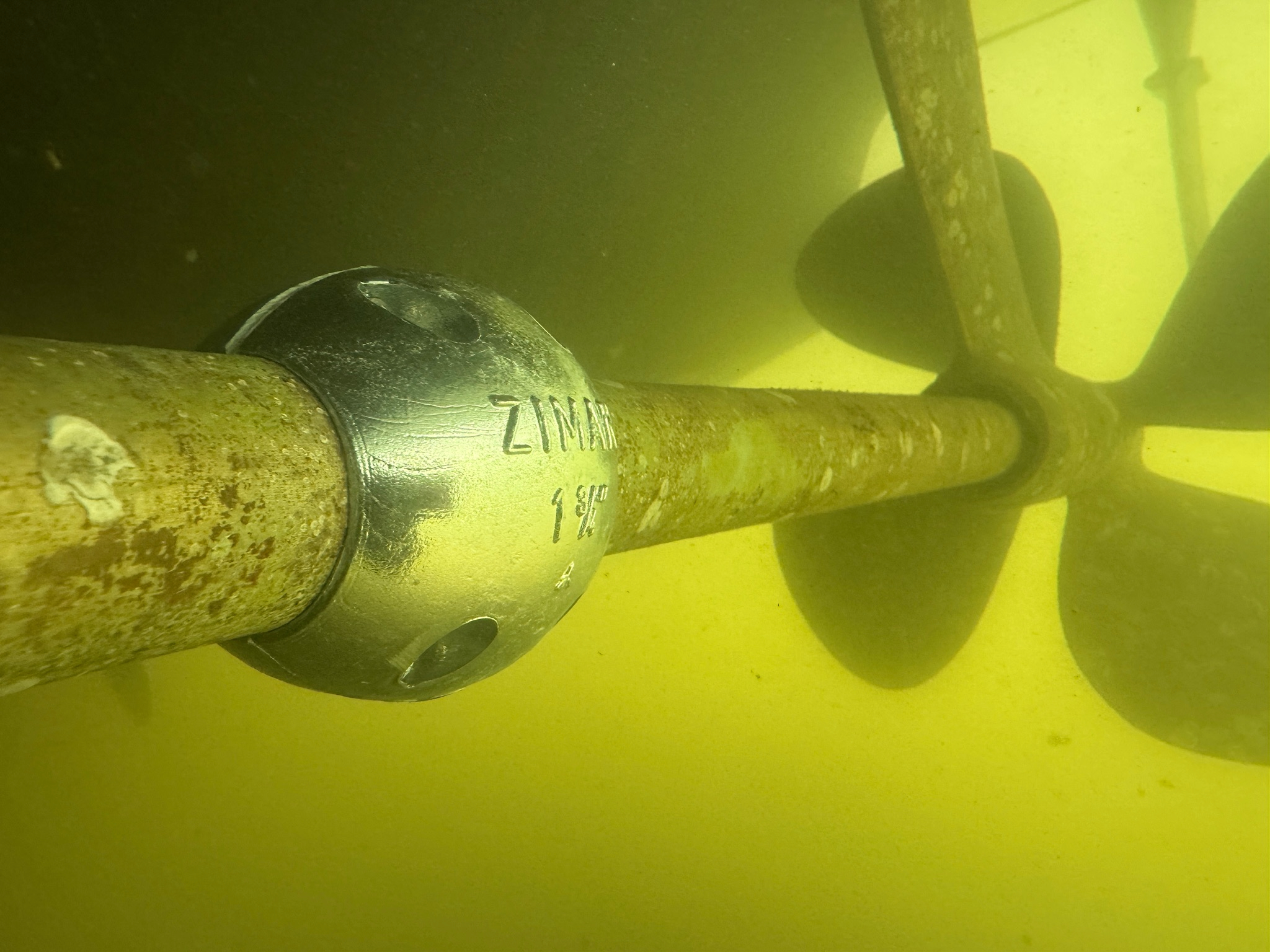
Zinc anodes, also called sacrificial anodes, are small metal collars and plates bolted or clamped to your propeller shafts, rudders, trim tabs, struts, and thru‑hulls. They are made from a metal that corrodes faster than stainless steel or bronze, so electrical currents attack the zinc first and leave your expensive running gear alone. As long as a healthy zinc is in place, it is doing its job silently and invisibly below the waterline.
When the zinc wears away completely, that protection disappears. Electrical currents can start to damage your shaft, prop, or cutless bearing housing instead. The damage is invisible until a diver gets under the boat, and by then, you are often looking at a costly replacement rather than a simple zinc swap.
The answer depends on your water type, marina conditions, and how much shore power is flowing through the dock. Florida salt water and busy marinas with lots of boats plugged in are among the most aggressive environments for zinc wear.
A good maintenance schedule looks like this:
Inspect shaft zincs every 3 months if your boat stays in the water full‑time.
Replace any anode that is roughly half gone, even if it looks like it could last a little longer.
Book an extra inspection any time you change slips, add underwater hardware, or notice new vibration or noise at speed.
Always check zincs after hauling out and relaunching, since re‑immersion can change wear rates.
Bundling zinc inspections with regular hull cleanings is the easiest way to stay on schedule. You can see how Sea Ranger approaches hull cleaning, zinc, and dock services so both marine growth and corrosion stay under control at the same time.
A professional zinc replacement is not just a quick swap. Here is what a Sea Ranger diver does from the moment they enter the water at your slip.
Before touching a single bolt, the diver goes over every inch of your running gear. Shafts, props, struts, rudders, trim tabs, and thru‑hulls are all checked for current zinc condition, unusual wear patterns, heavy growth, and early signs of pitting or corrosion. How the old zincs are wearing tells an experienced diver a lot about the electrical environment at your dock.
A zinc anode only works if it has solid metal‑to‑metal contact with the shaft. Before the new collar goes on, the diver cleans the mounting area down to bright bare metal, removing barnacles, slime, paint overspray, and any light corrosion that would reduce conductivity.
The worn anode halves are loosened and pulled free. Any corroded or stripped hardware is replaced at this stage so the new zinc can be clamped securely. A loose zinc that can spin or slide on the shaft is not protecting anything.
The new collar‑style zinc is positioned at the correct location on the shaft and tightened evenly so it clamps firm without distorting the shaft surface. The diver checks that it sits perfectly square with full contact all the way around.
After all running gear anodes are replaced, the diver does a final pass and gives you a clear picture of what was found, how the old zincs were wearing, and when you should plan the next inspection. No surprises, no guessing.
Experienced boaters with scuba gear and the right tools can technically change their own shaft zincs underwater. For most boat owners, the smarter move is to call a professional, and here is why.
Working under a boat at a dock requires solid buoyancy control, good visibility, and the ability to handle tools comfortably around props, lines, and pilings. A diver who does this every day can also catch things a first‑timer would miss, a bent blade on the prop, a cutless bearing that is almost gone, or a strut that shows early pitting. Catching those issues during a zinc job costs nothing extra. Missing them until they become a real problem costs a lot.
Because Sea Ranger Mobile Detailing handles both underwater work and topside details, you can coordinate zinc replacement, hull cleaning, and a full boat detail in one visit so nothing gets skipped.
Underwater boat shaft zinc anode replacement is most effective when it is part of a regular maintenance routine rather than a panic call after something goes wrong. Sea Ranger makes it easy to build a complete service plan that covers the boat from keel to canvas.
While the diver is under the boat replacing zincs and cleaning the hull, you can schedule a full interior and exterior boat detail topside, gelcoat polishing, vinyl conditioning, metal brightening, and canvas cleaning. If you have an RV, trailer, or motorhome that also needs attention, Sea Ranger’s RV detailing packages mean you can take care of all your toys in one coordinated stop.
You can see the full range of services and explore what fits your schedule and budget on the Sea Ranger services page.
Do not wait for a haulout to find out your zincs are gone. If any of these are true, schedule a dive inspection as soon as possible:
You have not had anyone under the boat in more than three months.
You moved to a new marina or slip recently.
You notice new vibration, noise, or roughness at certain speeds.
Your boat has been sitting on shore power for an extended period without regular zinc checks.
You recently added new electronics, thru‑hulls, or underwater hardware.
Corrosion does not take days off, and zinc anodes cannot protect your running gear once they are gone. The cost of a replacement zinc is a fraction of what a new shaft or prop costs.
If your shaft zincs are more than halfway gone, or you cannot remember the last time anyone checked your running gear, this is the right moment to get something on the calendar. You can head straight to the Sea Ranger home page to reserve your underwater hull cleaning and zinc replacement service without any back‑and‑forth.
While you are planning underwater work, it is also a great time to think about what else needs attention above the waterline. From full boat details to RV detailing packages, Sea Ranger keeps all your toys clean and protected on the same schedule.
If you want to keep learning about protecting your boat, check out the latest tips and real‑job photos on the Sea Ranger blog. And if you want to make sure you are not making common mistakes that undo all your hard work topside, take a few minutes to read 5 Costly Boat Detailing Mistakes to Avoid before your next service day.
Underwater boat shaft zinc anode replacement is the process of removing worn sacrificial zinc anodes from your propeller shafts and other underwater metal components and installing fresh ones, all without hauling the boat out of the water. A PADI-certified diver performs the work right at your dock to protect your running gear from galvanic corrosion.
For boats that live in the water full-time in Florida salt water, you should inspect your shaft zincs every 3 months and replace them when they are roughly half worn. Busy marinas with heavy shore power usage can accelerate zinc wear significantly.
Yes. A professional diver can replace your shaft zinc anodes underwater while your boat stays in its slip. Sea Ranger Mobile Detailing provides in-water zinc anode replacement and hull cleaning throughout the St. Petersburg and Clearwater area.
When zinc anodes are fully depleted, galvanic corrosion begins attacking your actual boat components, propeller shafts, props, rudders, trim tabs, and thru-hulls. This leads to pitting, rough surfaces, vibration, and costly repairs that could have been avoided with regular zinc replacement.
The cost of underwater boat shaft zinc anode replacement depends on the number of anodes, shaft size, and overall condition of your running gear. Contact Sea Ranger Mobile Detailing for a quote tailored to your specific boat and slip location.